The VALORANT 2026-2027 offseason opened on November 2, 2026, and the first 48 hours delivered some of the most significant roster upheaval the circuit has seen in a single window. Strafe’s roster tracker logged confirmed moves across all three VCT regions, headlined by T1’s near-total rebuild in Pacific and Aurora Gaming’s assembled superteam in EMEA. FURIA has exited the circuit entirely.
T1 Tears Down to the Studs
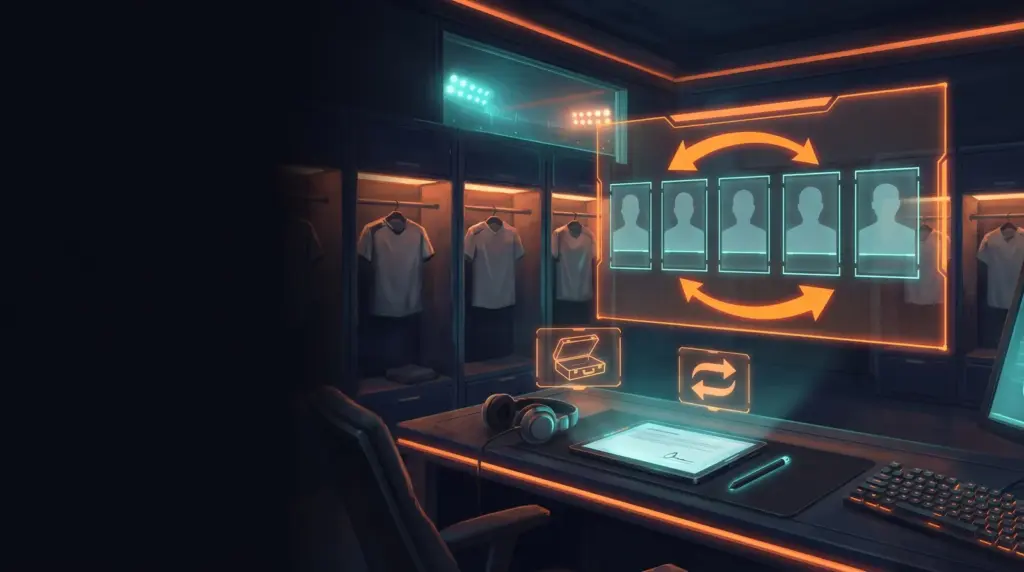
T1 confirmed on November 2 the departures of three starters—Meteor, Munchkin, and DH—along with head coach KDG (Kim Dong-gun) and assistant coach CheongGak (Lee Il-ho). Only stax, BuZz, and iZu remain under contract from the 2026 lineup.
That is five of eight roster slots emptied in a single announcement, including both coaching positions. For a team that lifted the Masters Bangkok trophy during the 2026 season, the scale of the reset is striking. T1 is not tinkering at the margins; the organization is rebuilding around a core of three players and will need to fill every other role, including the coaching staff, before the 2027 season begins.
The departures hit every role group. Meteor was a consistent presence in the initiator slot, Munchkin provided flex depth that let T1 swap compositions mid-series, and DH anchored the controller role. Losing all three simultaneously means T1’s remaining trio—stax, BuZz, and iZu—will need new teammates who can replicate that versatility or the team will need to fundamentally change how it drafts.
For Pacific teams scouting free agents, this dumps three proven VCT-level players onto the market at once. Expect bidding wars, particularly for Meteor, whose initiator play was among the most reliable in the region across 2026.
Aurora Gaming Builds a Superteam Before the Window Even Opens
While most teams waited for the November 2 window to make moves, Aurora Gaming had already assembled its roster by October 28. The organization signed Derke, Boo, trexx, B1SK, and chiwa, with hvoya appointed as head coach.
The timeline is worth noting. Derke departed Team Vitality on October 24. Boo left Team Heretics on October 21. Within a week, both were wearing Aurora colors. That speed suggests negotiations were well advanced before the official transfer window opened, even if the announcements landed before the formal deadline.
Aurora’s entry into VALORANT represents one of the more aggressive roster constructions in recent memory. Derke is a former Champions finalist who spent years as Vitality’s primary fragger. Boo established himself as one of EMEA’s most mechanically gifted duelists at Team Heretics. Pairing them on the same five-player roster creates a team with two genuine star carry options, which is rare in a game where most top squads build around one.
The addition of trexx, B1SK, and chiwa fills out the supporting cast, though how those three slot into roles alongside two players who both want to be the tip of the spear will be the question Aurora’s coaching staff answers in scrims.
Cloud9 Rebuilds, Sentinels Add OXY
In Americas, Cloud9 signed GLYPH on November 2 while simultaneously releasing OXY and Zellsis. The following day, OXY joined Sentinels.
The Cloud9 move is a partial rebuild rather than a teardown. Releasing two players and bringing in one suggests the organization is reshaping its identity rather than starting from zero. GLYPH’s addition fills one of the two vacated slots, leaving Cloud9 with at least one more signing to complete a five-player roster.
Sentinels adding OXY is the more consequential move for the Americas meta. OXY’s controller play was a stabilizing force for Cloud9 throughout 2026, and his ability to execute complex utility lineups under pressure makes him a plug-and-play addition for a team that values structured rounds. Sentinels now have a player who can anchor the back line while their duelists create space.
FURIA’s exit from the circuit entirely removes one of Brazil’s most established organizations from VCT competition. The departure shrinks the Americas pool and opens a slot that Riot Games will need to address before the 2027 season begins.
What This Means for the 2027 Season
The VCT 2027 format replaces traditional league play with cups and open qualifiers, which changes the calculus for roster construction. Teams no longer have a long regular season to find their footing; they need to be competitive immediately when each cup begins. That raises the stakes for every offseason signing and makes T1’s rebuild particularly risky. A team with only three contracted players and no coaching staff has less runway to gel before its first official matches.
Aurora, by contrast, built early. The organization gave itself over a month of practice time before the window even opened, which is a structural advantage in a format that punishes slow starts.
What Changes for Ranked Players
Roster moves at the VCT level filter down to ranked play within a few patches. When a superteam like Aurora finds success with a particular composition or agent pairing, expect to see those picks climb in ranked priority within two to three weeks of the first official matches. Derke and Boo both favor aggressive duelists; if Aurora runs a double-duelist comp effectively, expect the ranked queue to follow.
T1’s rebuild is less immediately relevant to ranked because the team will likely experiment with compositions during early cups. But the free agents now available—Meteor, Munchkin, DH—will land on new rosters and bring their agent pools with them. If Meteor joins a team that runs a different initiator than he played at T1, that agent’s pro-play priority shifts, and ranked pick rates tend to track those shifts within a month.
For players grinding ranked right now, the practical takeaway is to watch the first VCT 2027 cup for agent priority changes. The offseason just started, and more moves will land before the season begins. The meta that emerges from those first matches will define ranked for the next several patches.