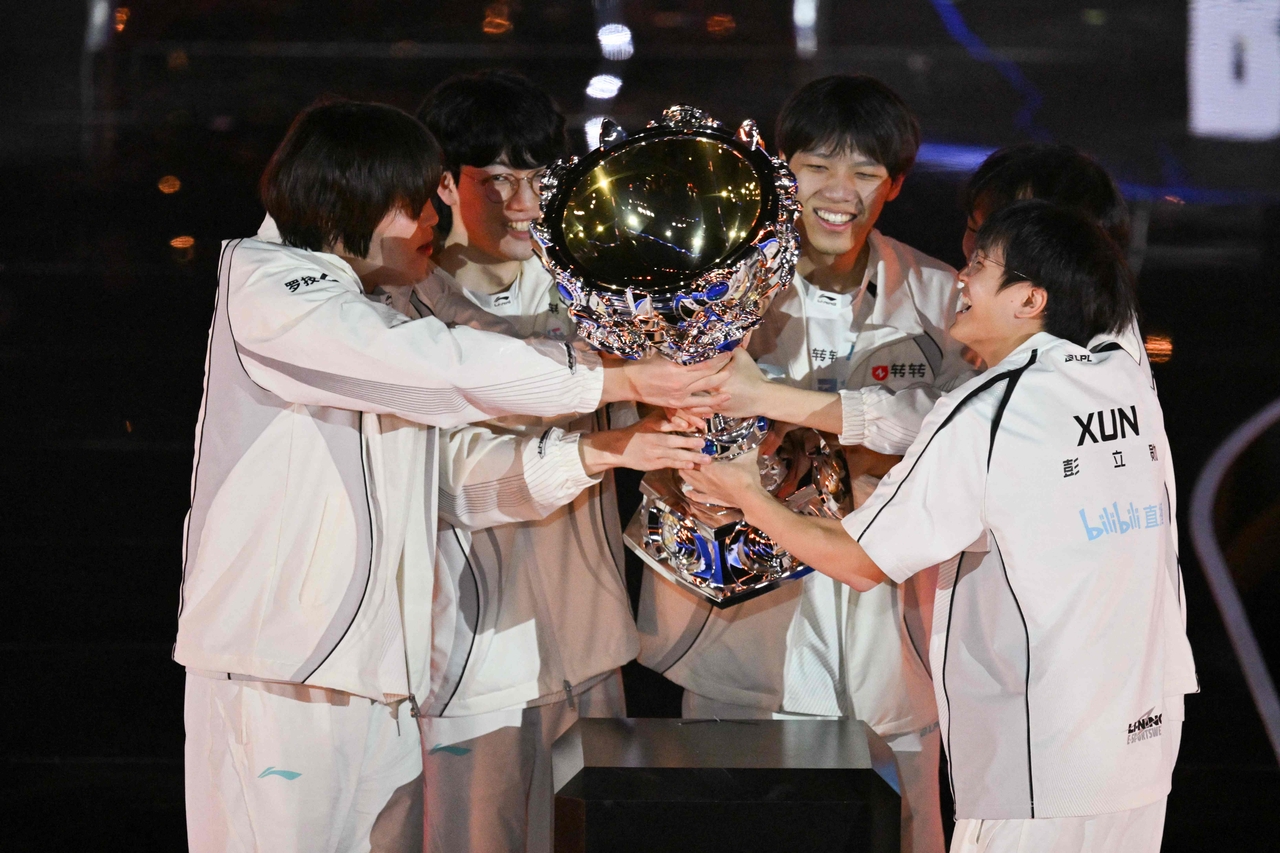
Bilibili Gaming defeated Gen.G 3-1 in the League of Legends World Championship 2026 grand finals on Sunday, November 15, at the Barclays Center in New York. The victory gave BLG their first Summoner’s Cup, ended South Korea’s four-year stranglehold on the title, and made them the first Chinese team to win a world championship since EDward Gaming in 2021.
The result was emphatic not just in scoreline but in scope: BLG eliminated every LCK team that entered the tournament. GosuGamers noted that Bilibili Gaming knocked out all four South Korean teams en route to claiming this year’s Summoner’s Cup. Hanwha Life Esports fell in the Swiss Stage, Dplus KIA in the quarterfinals, defending champions T1 in the semifinals, and Gen.G in the final itself.
A Rocky Start, Then a Clean Sweep
BLG entered Worlds as the LPL’s second seed and did not look like champions in the opening round. They lost their Swiss Stage opener to Movistar KOI, dropping to 0-1 and facing elimination pressure from the very first day. The team responded by beating Team Liquid Alienware and Karmine Corp in Rounds 2 and 3, then suffered another setback—a 2-1 loss to Top Esports in Round 4 that pushed them to the brink. A 2-0 sweep of Hanwha Life Esports in Round 5 secured their Knockout Stage berth and, in retrospect, set the tone for what followed.
Once the bracket stage began, BLG did not drop a single series. They swept Dplus KIA 3-0 in the quarterfinals, then faced T1—the 2025 world champions—in the semifinals and won 3-1. That set up the final against Gen.G, the LCK’s first seed, who had swept Invictus Gaming in their own semifinal to reach the championship match.
The Grand Final, Game by Game
Gen.G struck first. Game 1 went 38 minutes, with Park ‘Ruler’ Jae-hyuk carrying on Corki to a 7-kill, 8-assist line. It looked, briefly, like the script everyone expected: the LCK first seed taking control early and closing cleanly.
Game 2 told a different story. At 53 minutes it was the longest game of the series, and Peng ‘XUN’ Li-Xun delivered the performance that swung the final. On Naafiri, XUN posted 8 kills, 9 assists and a single death across nearly an hour of play, dragging the series level. The length of the game suggested a tense, methodical affair rather than a blowout—BLG grinding down Gen.G’s defenses rather than breaking them open.
Game 3 lasted 37 minutes and belonged to Park ‘Viper’ Do-hyeon. Playing Taaliyah, Viper finished 6-1-11, a stat line that reflects both his damage output and his refusal to die in a game where BLG held the tempo throughout. The series lead shifted to 2-1, and Gen.G needed a reverse sweep to stay alive.
Game 4 closed the series in 42 minutes. Chen ‘bin’ Ze-Bin carried on Gwen with 8 kills, 9 assists and 2 deaths—the kind of top-lane performance that wins championships. BLG took the game, the series, and the Summoner’s Cup.
Four Years of Korean Dominance, Ended
South Korea had won every World Championship since 2022. Four consecutive titles across four different rosters and organizations is the kind of run that starts to feel structural rather than circumstantial—a signal that the LCK’s development pipeline, coaching infrastructure, and competitive depth had simply outpaced every other region. BLG’s run dismantled that narrative in a single tournament by beating every LCK representative they faced.
The last Chinese world title came from EDward Gaming in 2021. Five years without a championship is a long drought for the LPL, a region that has historically matched or exceeded the LCK in mechanical talent but often faltered in the later stages of international events. BLG’s own history illustrates the pattern: they lost the Worlds 2024 grand final and entered 2026 carrying that weight. This time they closed.
For the individual players, the stakes were personal. Bin, XUN, Knight, and ON each won their first world championship. Viper, who already held a title from his time with EDward Gaming, collected his second—a distinction that places him among a small group of players with multiple world championships.
What This Means for the Competitive Landscape
For anyone following the meta or building a mental model of regional strength heading into 2027, this result matters. The LCK’s four-year run was built on a combination of superior teamfighting discipline, drafting flexibility, and the ability to adapt mid-series. BLG’s Knockout Stage performance—three series, all against LCK teams, not a single series loss—suggests the gap has not just narrowed but inverted, at least at the top end.
That does not mean the LCK is finished as a region. Gen.G reached the final; T1 pushed BLG to four games in the semifinal. But the depth advantage that allowed Korea to win four straight titles appears to have eroded. The LPL’s second seed outperformed the LCK’s first seed in the most important series of the year, and the LPL’s top seeds likely would have posed additional problems.
For ranked players watching the competitive scene to inform their own drafts: the champions that carried this series—Gwen, Taaliyah, Naafiri—are worth noting. Viper’s Taaliyah in particular is a pick that rewards positioning and wave management over raw mechanical flash, which translates well to solo queue at lower coordination levels. Bin’s Gwen performance reinforces that the champion remains a threat when a top laner can isolate and carry teamfights.