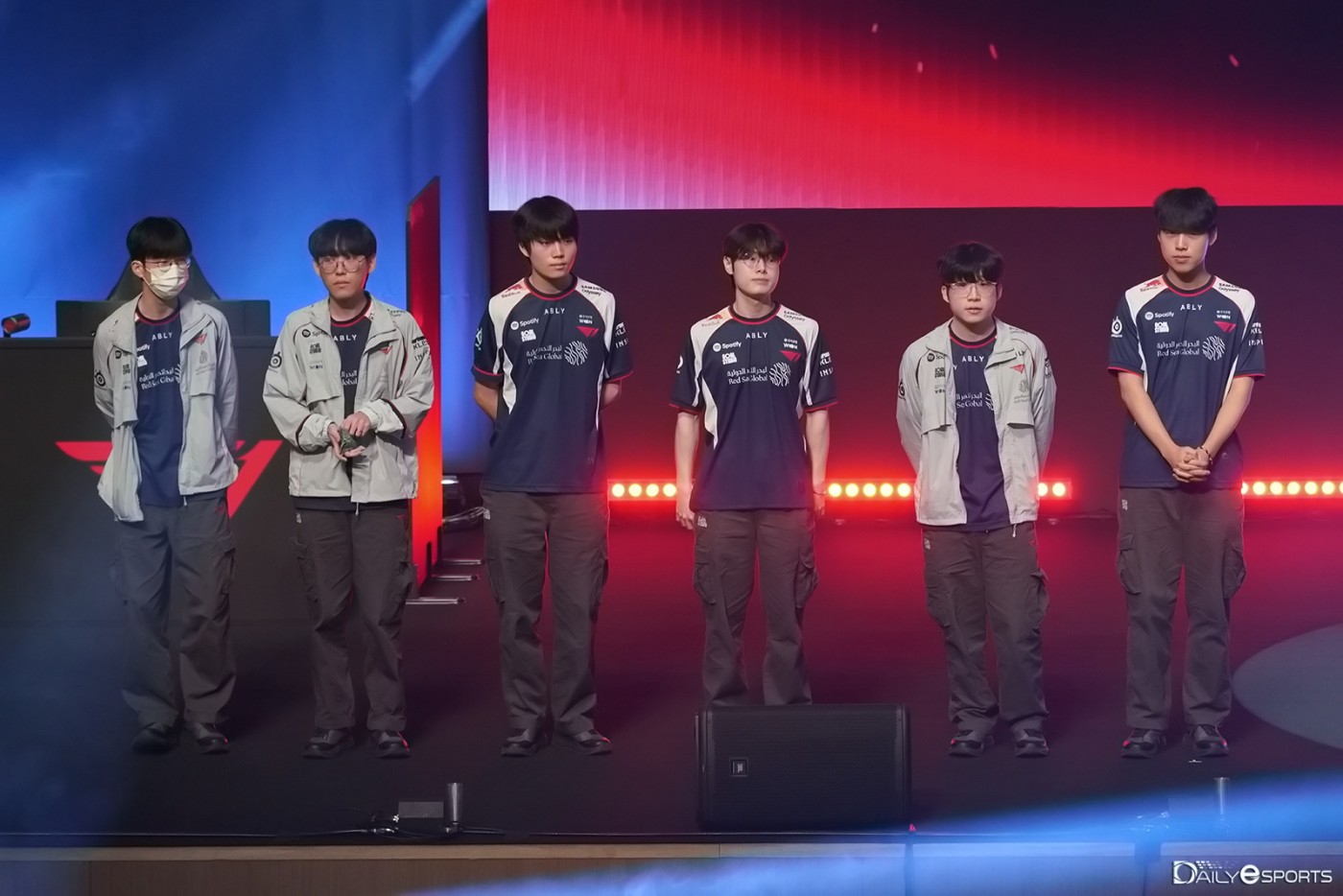
T1 swept Japan’s Barel 3-0 in sets on November 20, 2026, in the opening match of the 2026 OWCS Asia Stage 3 Playoffs at BEXCO Auditorium in Busan, South Korea. The result sends the Korean champions into a semifinal against Zeta Division on November 21, with a grand final spot on the line.
T1 entered the bracket as the OWCS Korea Season 3 champion. Barel represented Japan as that region’s Season 3 titleholder. The series lasted three sets and never looked close enough to threaten an upset.
A Clean Sweep Across Three Modes
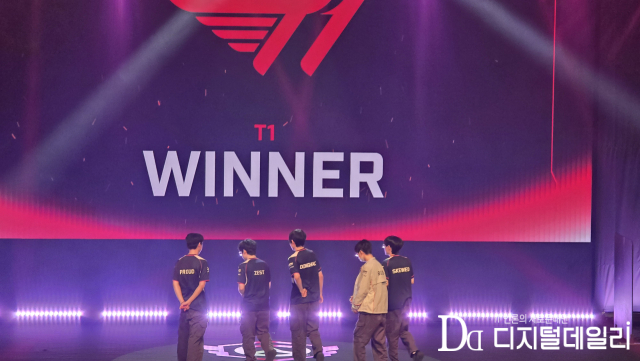
The match spanned Control, Escort and Flashpoint formats, touching the Busan, Shambhali Monastery and Surabasa map pool. T1 closed each set without Barel forcing a decisive fourth map, a result that reflects the gap between the two regional champions more than it flatters the bracket format.
Hero selections visible in match coverage included Genji, Sojourn, Junk Queen, Winston, Brigitte and Tracer — a composition that leans heavily on dive and flank pressure. Zest’s Genji play drew specific attention in Korean match coverage as a driving force behind T1’s tempo. The fact that a Genji-centric dive composition could operate unimpeded across three consecutive sets suggests Barel struggled to generate the coordination needed to punish aggressive flanks, a problem that has plagued international teams facing Korean rosters throughout 2026.
For context, this is not a case of a lower-seeded team catching a favourite off guard. T1 earned their spot by winning the Korean season outright, a region that has historically produced the deepest talent pool in Overwatch esports. Barel, while the best Japan had to offer in Season 3, entered as a clear underdog. The 3-0 scoreline confirmed that gap rather than exposing a bracket quirk.
Zeta Division Picks T1 for the Semifinal
As the seed match winner, Zeta Division earned the right to choose their semifinal opponent. They selected T1, meaning the November 21 match will determine who advances to the grand final. The seed match system gives the top-performing team a strategic lever: by choosing who they face, they can theoretically avoid a stylistic counter or target a team they believe they match up against more favourably.
That Zeta Division chose T1 — the team that just posted a 3-0 sweep — is either a statement of confidence or a calculation that T1’s aggressive dive style is something they have a specific answer for. Either way, it sets up the most anticipated match of the bracket so far. The winner advances to the grand final; the loser’s tournament ends.
The bracket structure means Barel’s run is over. For a Japanese roster that had to win an entire domestic season just to reach this stage, a 0-3 exit in the opening round is a harsh reminder of how steep the climb remains for regions outside Korea at the OWCS level.
The Venue and Its Significance
The OWCS Asia Stage 3 Playoffs are being held as part of G-Star 2026, South Korea’s largest gaming expo, at BEXCO in Haeundae-gu, Busan. Running an Overwatch tournament inside a general gaming convention rather than a dedicated esports arena gives the event a different energy — larger foot traffic, more casual viewers in the audience, and a stage that is one part of a much bigger show rather than the main attraction.
For the players, the practical difference is noise and scheduling. G-Star’s floor is loud, and match times compete with dozens of other exhibitions for attention. Teams that have played at previous G-Star events will have some familiarity with the environment; for Barel, it was likely their first time on a stage of that scale.
What This Means for Players
If you play Overwatch competitively or follow the ranked ladder closely, the immediate takeaway is about the current meta at the highest level. The hero pool visible in this series — Genji, Sojourn, Junk Queen, Winston, Brigitte, Tracer — points toward a dive-heavy composition that rewards mechanical skill on flank heroes and punishes teams that cannot coordinate focus fire quickly enough.
Genji in particular continues to be a priority pick at the professional level. If your ranked team is struggling against dive compositions, this series is a useful reference point for what elite-level execution looks like: the goal is not to prevent the Genji from getting value, but to make every dash commitment costly through pre-positioned crowd control and coordinated burst.
For players on Korean servers, the result reinforces what the ladder already suggests: the gap between top Korean teams and the rest of the Asia region remains wide. If you are climbing in the Korean region and facing players who seem to coordinate dive engages with unusual precision, there is a reasonable chance you are running into someone who has studied or played alongside rosters like T1’s.
The semifinal on November 21 will be a sharper test. Zeta Division has historically been one of the few teams capable of matching Korean aggression with aggression of their own. If T1’s Genji-centric dive is met with equivalent tempo rather than passive peeling, the series could look very different from the Barel sweep. That match will be the better indicator of whether T1’s dominance is sustainable through the rest of the bracket or whether it was a product of facing an outmatched opponent in round one.