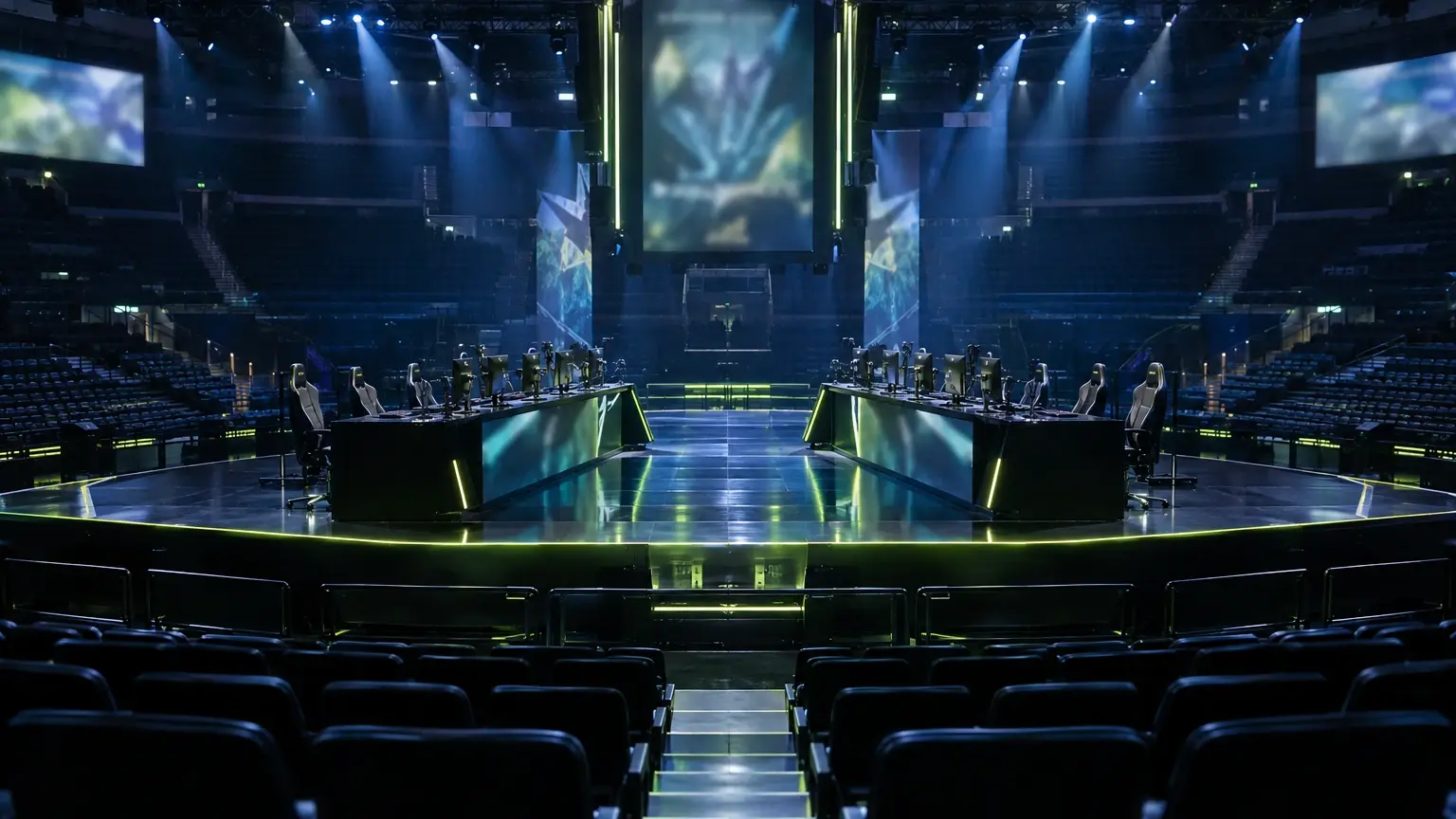
On April 8, 2026, Riot Games announced the most significant structural overhaul to the VALORANT Champions Tour since the circuit launched: beginning in 2027, the VCT will replace regular-season league play with a tournament-based model built around new events called VCT Cups, open qualifiers for every global event, and a refreshed two-year partnership cycle. Valorant Esports Staff described the announcement as “the first in a series of updates on changes you’ll see in VALORANT Esports next year.”
Cups Replace the Regular Season
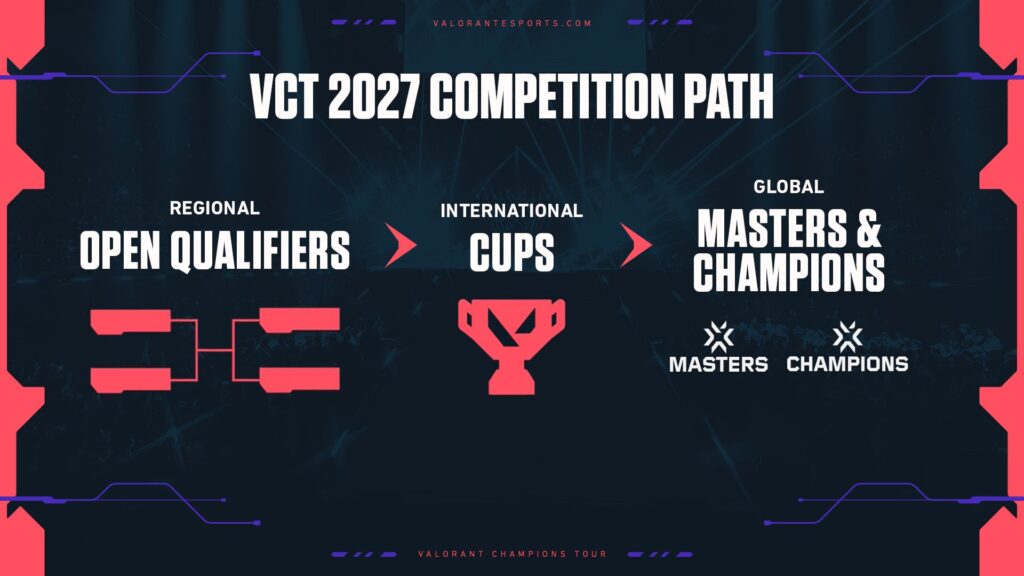
The backbone of the new format is the VCT Cup. Eight Cups will run each year — two per territory — each staged as a LAN event that concludes with a finals weekend. Cup results feed directly into qualification for Masters and Champions, the two tiers of international competition. Riot Games said it plans to host more than 20 tournaments annually across more than 16 cities, a significant expansion of the live-event footprint.
Prize money scales with the stakes. Riot Games said cash amounts approximately double from Cups to Masters and double again from Masters to Champions. Total prize pools will exceed $6 million USD per year, with fully funded travel for global events. The season-opening Kickoff tournament will remain, though Riot Games described it as “a bespoke tournament with a unique format,” open to any team with qualifiers running in the fourth quarter of the preceding year.
The three principles Riot Games laid out for the restructure are blunt: “Every match should carry weight,” “The path to global events should be open,” and “Live events should visit more locations.” The first principle is the one doing the most work. Under the old league model, mid-table matches in a long regular season often had little bearing on playoff seeding. A Cup format compresses that into a shorter, higher-stakes bracket where a single loss can end a run. Whether that produces better competition or just more variance is a question the 2027 season will answer.
Open Qualifiers End the Ascension Grind
The most consequential change for teams outside the partnership system is the introduction of open qualifiers for all Masters and Champions events. Any team, anywhere, can enter.
Under the previous structure, non-partnered teams had to grind through an entire season of lower-division play for a single promotion slot via Ascension. One team per territory, per season, got the chance. That path is gone. Riot Games stated the goal plainly: “Our goal is for every team, in every territory, to have a path to every global event.”
The financial picture for non-partner teams has shifted as well. Riot Games said the best non-partner teams can “stack Championship points and competitive payouts all season and, in extraordinary cases, even earn more than bottom of the pack partner teams.” That is a bold claim, and one worth revisiting after the first full season of data. For context, Riot Games noted that over $86 million from digital goods was shared with VCT teams during the 2025 season.
A portion of funding will also be dedicated to Game Changers each year, though Riot Games has not yet shared exact distribution mechanics.
A New Partnership Cycle and a Roster Earthquake
The 2027 season opens a new two-year partnership cycle. Applications for prospective teams opened on April 8, 2026, and 32 partnered teams have since been confirmed. Riot Games evaluates partnership applications on five criteria: commitment to growing the VALORANT community, community resonance across fandom and content, business sustainability and responsible operations, operational excellence and established infrastructure, and competitive success and performance development.
Partnered teams receive four forms of compensation: a guaranteed Partner Base Payment, Performance Bonuses for meeting partnership goals, Team Capsules in the form of in-game skins, and Direct Seeding into later rounds of qualifiers. That last item is the one that matters most competitively — it means partner teams skip the earliest and most crowded qualifier brackets.
The restructure has already triggered a wave of roster changes. LOUD’s second Champions title at Champions Shanghai capped the 2026 season and set the stage for a turbulent off-season. Many player contracts expire on November 2, 2026, the date that opens VCT free agency. The early departures have been significant: Wo0t left Team Heretics, Meteor departed T1, and keiko said NRG informed him he would not be returning. Team Vitality parted with Derke after two seasons. Paper Rex released d4v41, GIANTX moved on from ara, and MIBR’s entire roster went inactive. Evil Geniuses and Global Esports ceased their VALORANT operations outright.
The scale of the movement is not surprising. When the competitive structure changes this fundamentally, organizations reassess rosters, budgets, and whether they want to be in the game at all.
What This Changes for Competitive Players
For teams and players outside the partnership system, open qualifiers are the headline. The old Ascension path demanded season-long consistency in a lower division for a single promotion slot. The new model offers a more direct route: win through an open bracket, and a team can reach a global event in a single tournament run.
That shifts the preparation calculus. A roster that peaks at the right moment can outperform a more talented but less cohesive squad in a single-elimination bracket. Team building, scrim structure, and tournament readiness now matter more relative to season-long grind. The financial incentive Riot Games described — non-partner teams potentially outearning bottom-tier partners — gives concrete reason to take the open path seriously.
For partnered teams, the trade-off is different. Direct Seeding provides a structural advantage, but the Cup format means fewer total matches and less room to recover from a bad weekend. A league schedule absorbs losses; a bracket does not.
Full details on qualifier structures, seeding rules, and Game Changers funding are expected later in 2026.