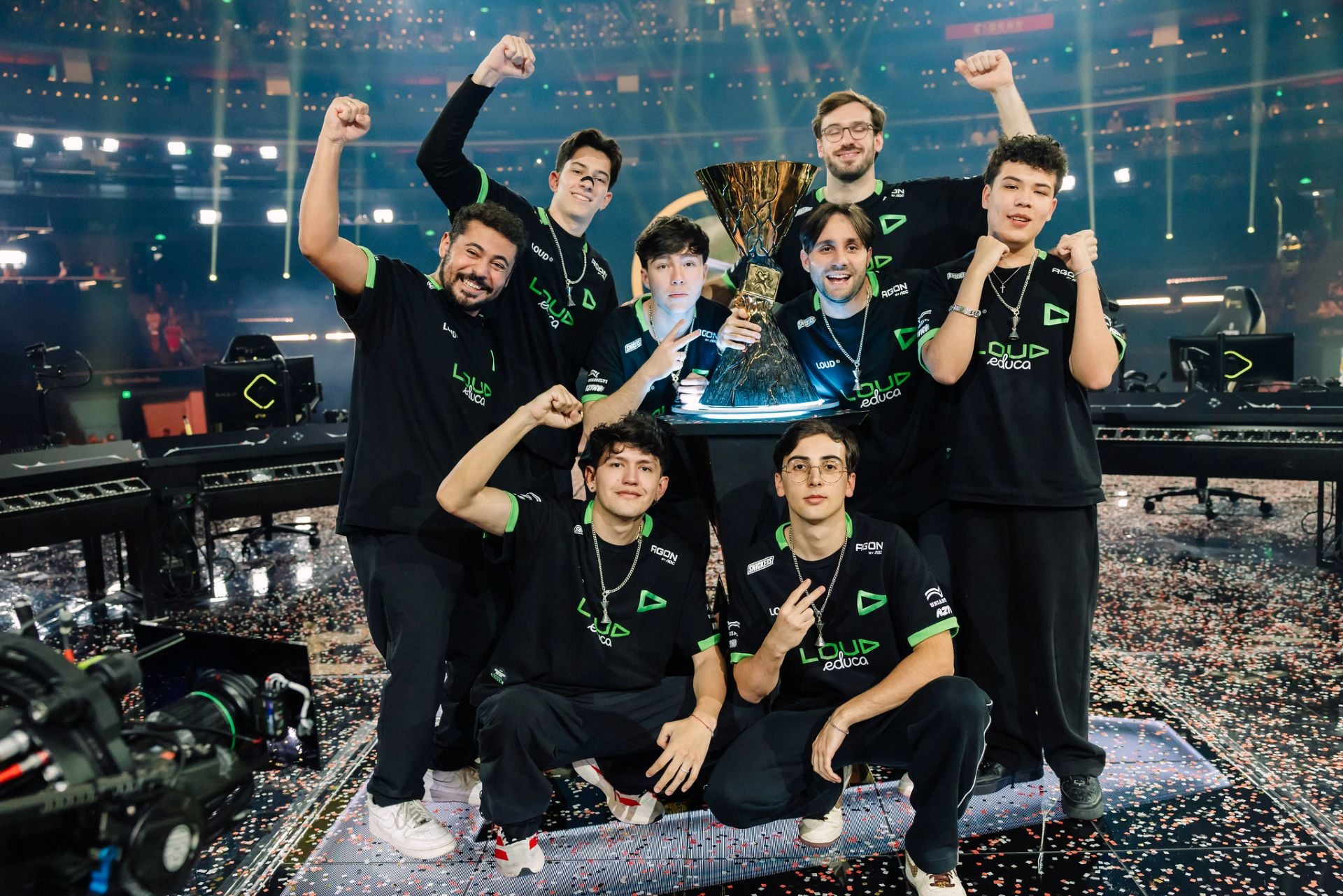
LOUD defeated Team Vitality 3-1 in the Grand Final of VALORANT Champions 2026 on October 18 in Shanghai, claiming the organization’s second world title and becoming the first team to win VALORANT Champions twice. The victory capped a run that saw the youngest roster ever to reach a Champions Grand Final overcome a group-stage loss to the same opponent they ultimately beat for the trophy.
How the Grand Final unfolded
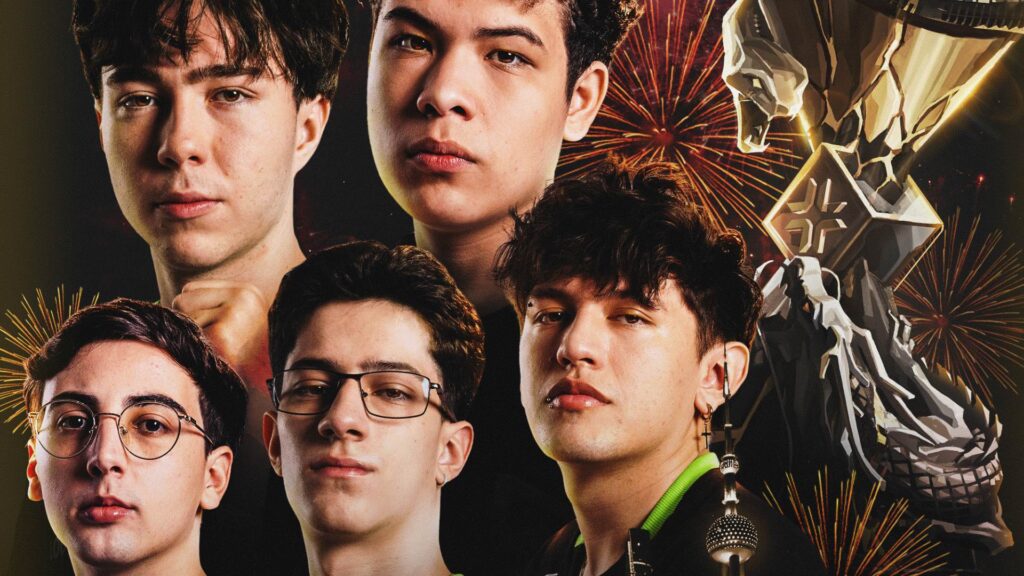
The series opened on Summit, where LOUD faced a 9-3 halftime deficit. The team mounted a full reversal, with Roberto “erde” Lobos landing a triple kill that sealed the map 13-11. Team Vitality answered on Lotus, taking the map 13-8 to level the series at 1-1.
From there, LOUD controlled the pace. On Sunset, the team strung together an 11-round run that ended the map 13-5. Enzo “tkzin” Zimiani was the standout performer on that map, posting a 26/10/3 KDA while playing Neon. Haven closed the series 13-10 in LOUD’s favor, with erde finishing at 255 ACS on the final map.
Across the four-map series, tkzin led all players with 77 kills. erde finished with 66 kills and earned the tournament MVP award. Both players were part of a lineup built around four rookies and one player with only a year of Tier 1 experience, making the result a genuine outlier by historical standards.
The youngest Grand Final roster in Champions history
LOUD’s starting five averaged 20 years and five months in age, the youngest ever to reach a VALORANT Champions Grand Final. Every player on the roster was winning an international tournament for the first time. The organization had arrived in Shanghai as the Americas region’s second seed after finishing last at VCT Americas Kickoff 2026, a result that made the title run all the more improbable.
The path to the trophy included a loss to Team Vitality in the group stage, followed by victories over the same team in both the upper-bracket final and the Grand Final. Lucca “lukxo” Travaioli captured the team’s mindset before the final in a pre-match interview with TheSpike: “One day it could be you, believe.”
The win also set several individual milestones. David “DaviH” Cruz became the first Portuguese player to win VALORANT Champions. Sebastián “Darker” Cicuamia became the first Colombian player to lift the trophy. Assistant coach Miguel “Bati” Batista became the first Portuguese coach to win the title. The event carried a $1 million prize pool.
erde’s MVP run and personal loss
Erde, 18, served as LOUD’s in-game leader throughout the tournament and delivered the defining individual performance of the Grand Final. His triple kill on Summit completed the comeback from a six-round deficit and set the tone for the rest of the series. His 255 ACS on Haven was the highest single-map score in the final.
After the match, erde revealed that his mother had passed away days before the Grand Final. He dedicated the victory to her in a post on X: “Descansa en paz mami te lo mereces🥰.”
On the other side, Timofey “Chronicle” Khromov reached his third VALORANT Champions Grand Final, becoming the first player in history to do so. He finished as runner-up on all three occasions. Chronicle played Neon in the Grand Final—a Duelist pick that LOUD exploited throughout the series, catching him in positions that suggested limited comfort on the agent. The result was Team Vitality’s best-ever finish at the tournament.
End of the partnership era
Champions Shanghai was the final Tier 1 event of VALORANT’s partnership programme era. The competition transitions to a more open model in 2027, meaning this title carries additional weight as the last awarded under the current structure. The win also extended the Americas region’s run of claiming the last three consecutive international titles.
Yinsu Collins, speaking to Insider Gaming, summarized what the result signals for the competitive landscape: “It’s safe to say LOUD is proof that the next generation of VALORANT talent is going to be insane. They looked incredible before Champs even started and they delivered on the biggest stage.”
What this means for ranked players
The Grand Final reinforced Neon’s viability at the highest level when played by a specialist. tkzin’s 77-kill series and his 26/10/3 KDA on Sunset demonstrate that the agent can dominate a coordinated team when the player has mastered her movement and entry timing. Chronicle’s struggles on the same agent showed the flip side: Neon punishes players who lack the mechanical fluency to use her slide and fast entry consistently. If Neon is part of your agent pool, the gap between effective and ineffective play is wider than most Duelists. Practice the movement in deathmatch and custom games before queuing ranked.
For IGLs, erde’s performance is a case study in calling comebacks. The Summit reversal from 9-3 down required mid-round adjustments that only work when the team trusts the shot-caller completely. If you lead your team’s calls, studying how LOUD restructured their defaults after halftime on Summit—switching from passive holds to aggressive retakes—is worth a VOD review.