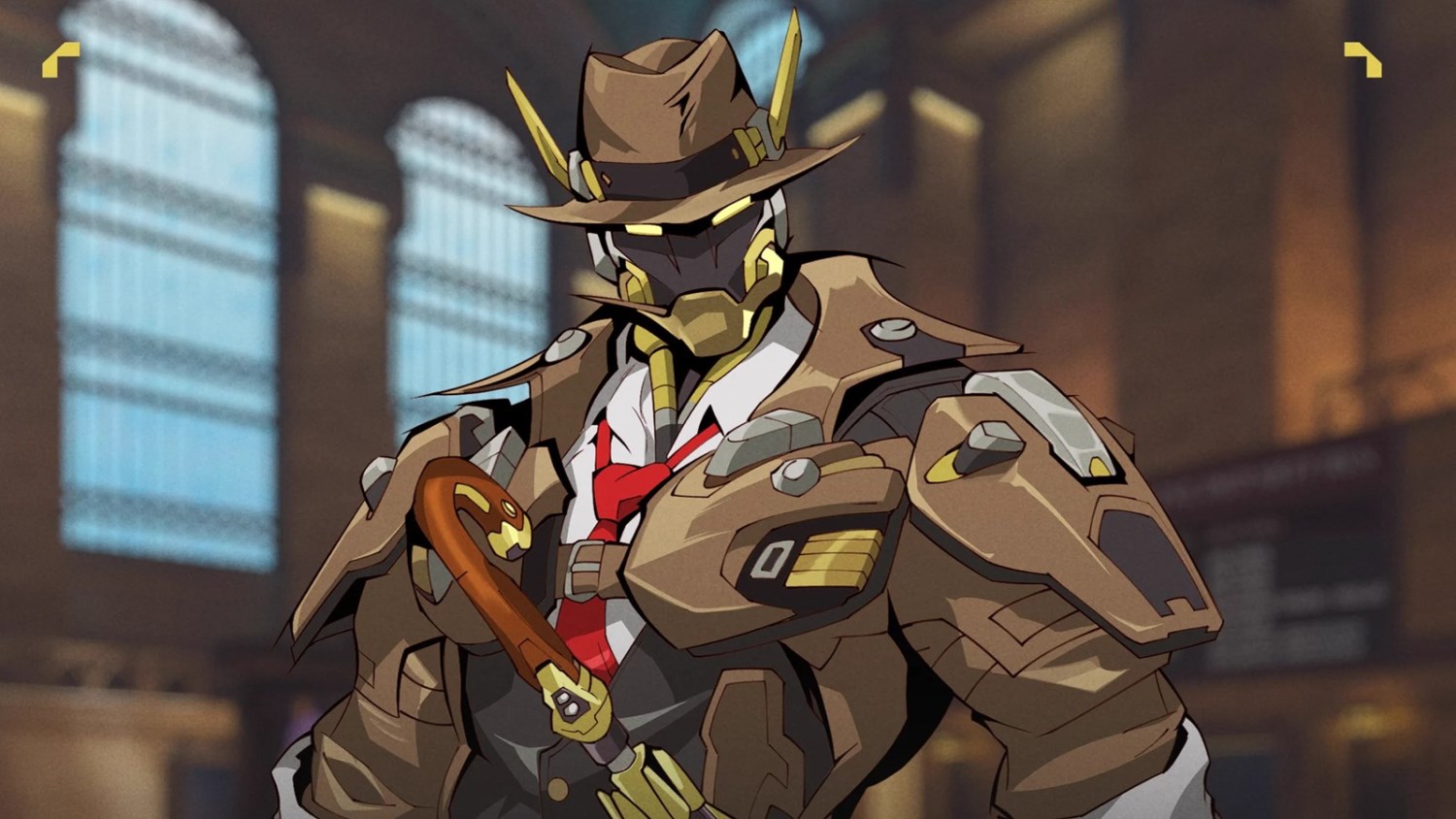
Blizzard’s Overwatch team has confirmed that Hudson, the game’s 55th hero, will launch as a Damage hero rather than the Support role the studio had previously indicated. The Omnic detective was revealed during a video interview with creators Emongg and Flats on Thursday, November 13, and the reaction was pointed enough that game director Aaron Keller posted a public explanation on X the following day.
A late pivot from Support to Damage
Blizzard entered 2026 with a public commitment: 10 new heroes over the course of the year. Hudson is the tenth and final addition on that list, which makes the role change more conspicuous, not less. There is no eleventh hero waiting in the wings to fill the Support gap that Hudson was supposed to address.
When development began, Hudson was a Support. By the time players saw him, he was Damage. Associate director Alec Dawson walked through the reasoning during the reveal interview with Emongg and Flats.
“During development, we iterated a lot, we playtested a lot, and the core mechanic and the thing that we were really falling in love with on this hero didn’t really match with being a support. We kind of leaned into the things we loved the most about the hero, and it definitely fit DPS a lot better.”
Dawson framed the decision as one driven by the character’s identity rather than a roster calculation. “As the hero developed, as we look at the mechanics, how they match with the aesthetic, how they match with who the hero is supposed to be, how they’re supposed to be represented in our game, season 6’s hero will be a DPS. He’s really fun.”
Keller used the word “pivot” to describe the change—a term that implies a deliberate, sharp turn rather than a gradual drift. That the pivot happened late enough to contradict what players had been told is the core of the frustration. Role changes during development are not unheard of in live-service games, but they are unusual when they land this close to launch and reverse a role the community had already been led to expect.
Keller addresses the backlash
The backlash arrived quickly. Some fans called the switch a bait and switch, arguing that Blizzard had set expectations for a Support hero and delivered something else entirely. Keller addressed that criticism on X on Friday, November 14, in a post that read less like a scheduled community update and more like a direct reply to the people who felt misled.
“When we started work on the detective, he was a Support. But as time went on and the kit continued development we realized that it wasn’t working. Once we tested Hudson as a DPS, the turn around in our feelings for him was instantaneous and dramatic.”
He drew a line between shipping a hero in the expected role and shipping one the team actually believed in. “This decision ultimately wasn’t whether we release a DPS or a Support hero, it was whether we release a great character or one we didn’t believe in.”
Keller closed with a broader reflection on the development process: “Building Heroes for OW is as much of an art form as a technical challenge. Game dev isn’t always straightforward. Sometimes we need to adapt to create the best version of something. The team is incredibly proud of this Hero. I hope you all feel the same way when he launches in Season 6.”
The argument is not unreasonable. Development does produce surprises, and a kit that fails in one role can thrive in another. But it is also an argument that asks players to trust the process after the process produced a result different from the one they were promised. Whether that trust is well placed will depend on whether Hudson’s kit actually offers something a Support version could not.
The roster math
Overwatch’s Damage roster currently stands at 23 heroes. Hudson will bring it to 24, extending what is already the game’s deepest pool. The Support roster, which players had been expecting to grow, remains unchanged heading into Season 6.
The imbalance is not new. Damage has long been the most populated role in Overwatch, and adding another hero to it does not address the complaint that Support players have raised for some time: that their pool offers less variety and fewer options for self-expression in ranked and competitive play. A new Support would have been a meaningful addition to that roster. Its absence is noticeable, and it will not be filled in 2026.
For the competitive scene, the practical effect is straightforward. Teams will have one more Damage option to consider in drafts and compositions, while Support players work with the same tools they had in Season 5.
Hudson is expected to launch with Season 6, which is anticipated to begin on December 8, 2026.
For players
If you main Support, the short version is that no new hero is coming with Season 6. The roster you have is the roster you are getting for the rest of the year.
If you play Damage, Hudson is another hero to learn, and given the size of the role’s pool, he will need to distinguish himself quickly. Overwatch has a history of new Damage heroes arriving to significant initial interest before settling into a niche—or failing to find one entirely. Pay attention to early patch notes and any balance adjustments in the first weeks after launch.
The broader takeaway for anyone following the roadmap: Blizzard’s hero plans can shift between announcement and release. The studio delivered 10 heroes in 2026 as promised. The roles those heroes fill, however, are not guaranteed to match early communication. That is worth keeping in mind for whatever comes next year.