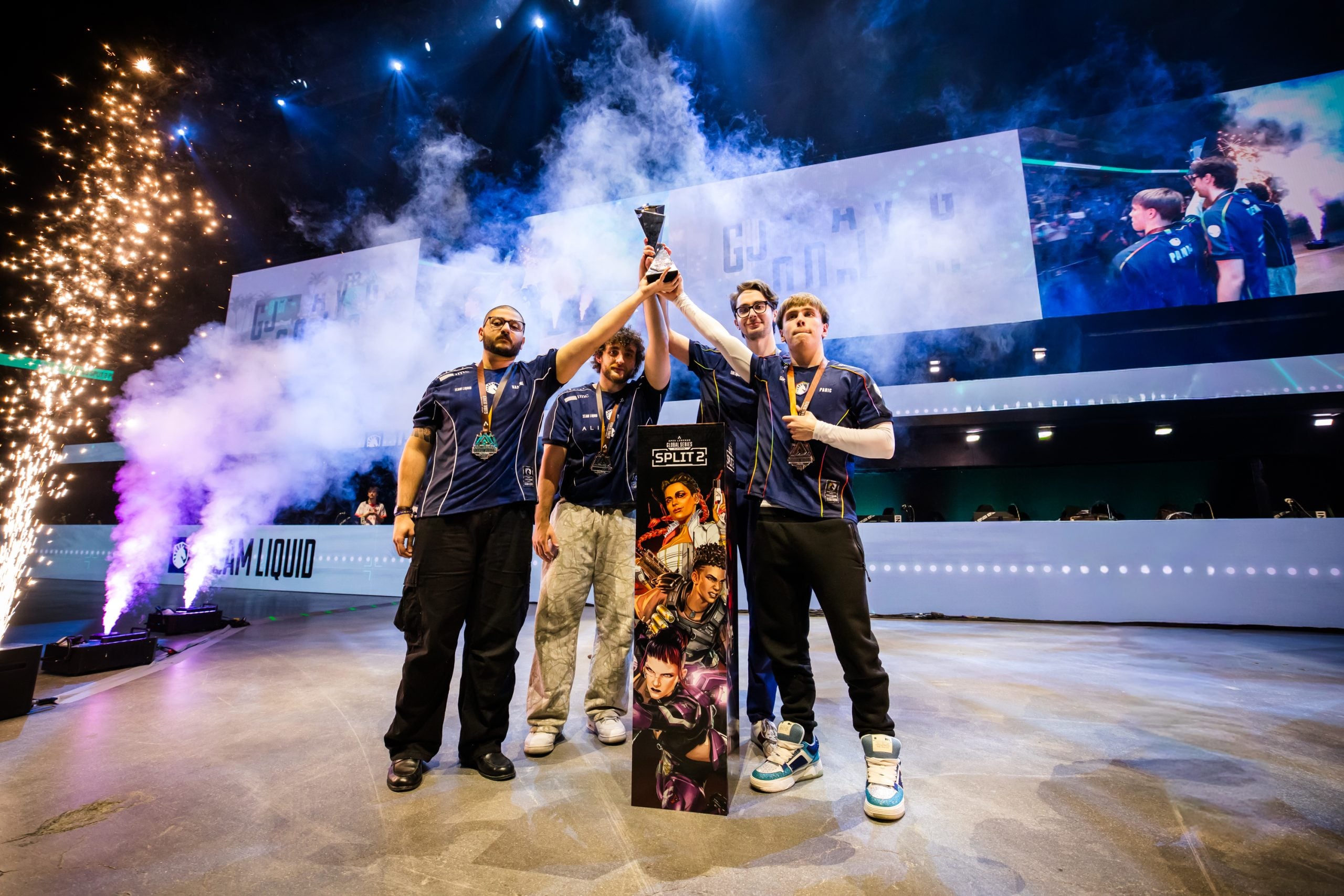
Team Liquid won the Apex Legends Global Series Split 2 Playoffs on November 1, 2026, closing out a nine-match Grand Final at the Orleans Arena in Las Vegas with 91 points. The roster of Rhys ‘Zer0’ Perry, Nicholas ‘Sikezz’ Odum, and Nathaniel ‘Panic’ Arthur — coached by Karim ‘Kapreme’ Mardambey — took down Rex Regum Qeon in the deciding circle of Match 9 to claim the title and $600,000 from a $2 million prize pool. Team Liquid confirmed the result in a newsroom post the following day, calling it a defining moment for a roster that only came together this year.
How the Match Point Final Unfolded
The Grand Final used the Match Point format, which requires a team to first reach 50 points and then win a subsequent match to claim the championship. That threshold creates a specific kind of tension: once a team hits Match Point, every other squad in the lobby knows exactly who to stop. The format has produced some of the most chaotic finishes in ALGS history, and this one was no exception.
Several teams — Alliance, Forged Wolves, White Grim Reaper, Team Vision, and Aurora — reached Match Point or threatened to close the final before Team Liquid could. Aurora won Match 8 in a chaotic final circle, resetting the clock and forcing a ninth game. That single match win extended the series and gave Liquid one more chance to finish the job.
Match 9 broke in Team Liquid’s favour early. The trio picked off Team Vision in the opening minutes, removing one of the teams that had been in contention throughout the final. From there, Liquid controlled the pace and closed the tournament by defeating Rex Regum Qeon in the final circle. The win gave them the title without needing to reach Match Point themselves in the ninth game — they had already crossed the 50-point threshold earlier in the series.
Zer0’s 100th Win and a Roster Built This Year
One of Team Liquid’s game wins during the final was the 100th ALGS match victory for Zer0, making him the first player in the series’ history to reach that mark. Team Liquid’s newsroom post highlighted the milestone, noting it as a historic first. For a player who has been a fixture at the top of Apex Legends esports since the series began, the number is less surprising than the fact that no one else has reached it yet — a testament to how difficult sustained success is in a format where one bad circle can end a run.
The roster itself is relatively new. Zer0, Sikezz, and Panic came together this year under the Team Liquid banner, with Kapreme coaching. Winning a LAN title this quickly is notable in a scene where roster chemistry often takes multiple splits to develop. The team had to navigate a 20-team field through bracket play before reaching the Match Point final, a path that tested their adaptability across multiple days of competition.
The $600,000 first-place prize is the largest single payout of the ALGS Year 6 season so far. The event also distributed 3,000 Championship Points to the winners, which carry direct weight in determining qualification for the ALGS Championship later this year.
What This Means for Championship Qualification
Split 2 Playoffs results directly affect which teams qualify for the ALGS Championship and which are sent to the Last Chance Qualifier. Championship Points accumulated across the season determine seeding and direct qualification slots. Team Liquid’s 3,000-point haul from this event likely locks them into a direct Championship berth, though the full qualification picture depends on results across all regions and events in Year 6.
For teams that finished just outside the top placements in Las Vegas, the margin between a direct Championship invite and the Last Chance Qualifier can come down to a single match result. The nine-match format amplifies this: a team that wins one more game in the final can swing hundreds of Championship Points, and those points are the difference between a guaranteed spot and a do-or-die qualifier.
For Players
If you follow the ALGS competitive scene, the key takeaway is structural: the Match Point format continues to produce long, unpredictable finals where any team that reaches the point threshold can be denied by a single well-timed third-party or circle collapse. Aurora’s Match 8 win is a reminder that reaching Match Point is not the same as winning the tournament.
For ranked players, the meta implications are worth watching. The teams that performed well in Las Vegas — Team Liquid, Aurora, RRQ, Team Vision — represent a range of compositions and playstyles. The fact that the final went nine matches suggests the current competitive meta does not heavily favour one specific approach, which typically means the ranked ladder will remain diverse in the short term. If you are grinding ranked this split, the variety at the top means no single composition is a guaranteed free climb.
The ALGS Split 2 Playoffs field was set earlier in the split through regional qualification, with 20 teams advancing to the Match Point finals. The event served as the final major LAN before the ALGS Championship, and its results will shape the competitive landscape for the rest of Year 6.